GF-Jib Slider
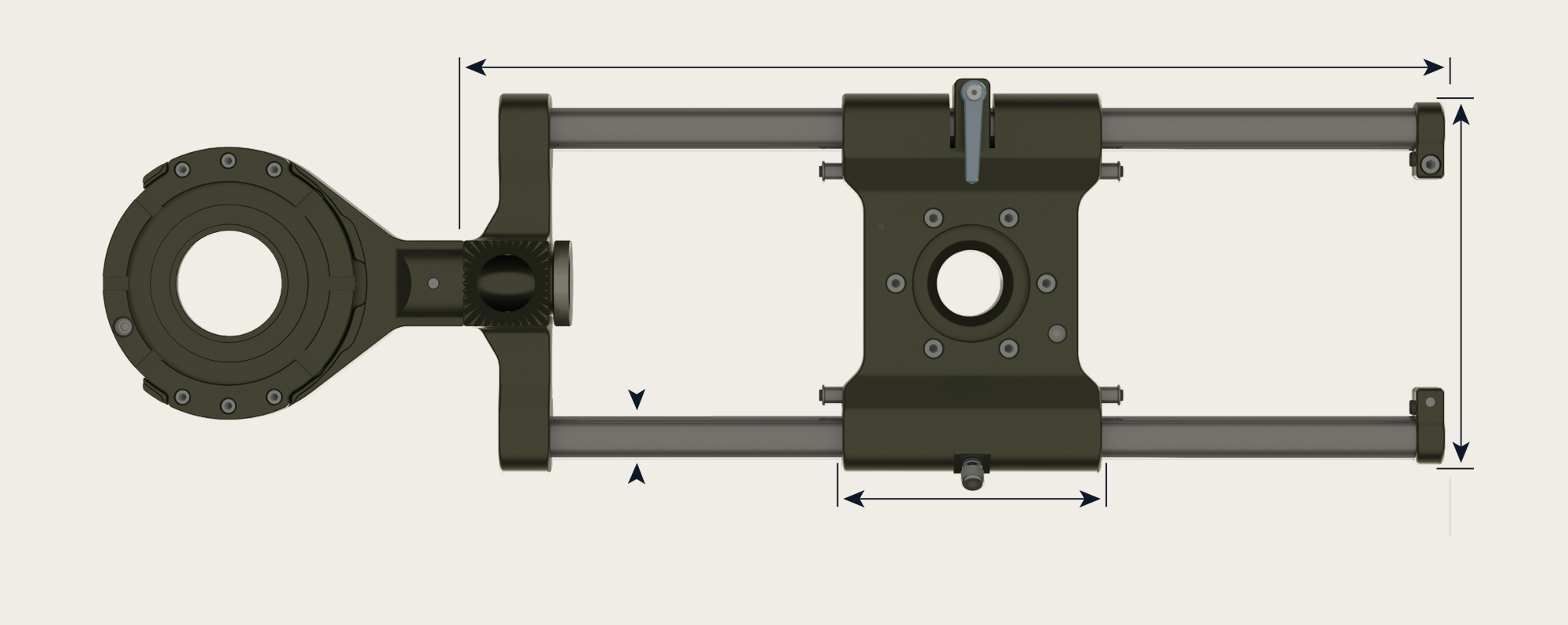
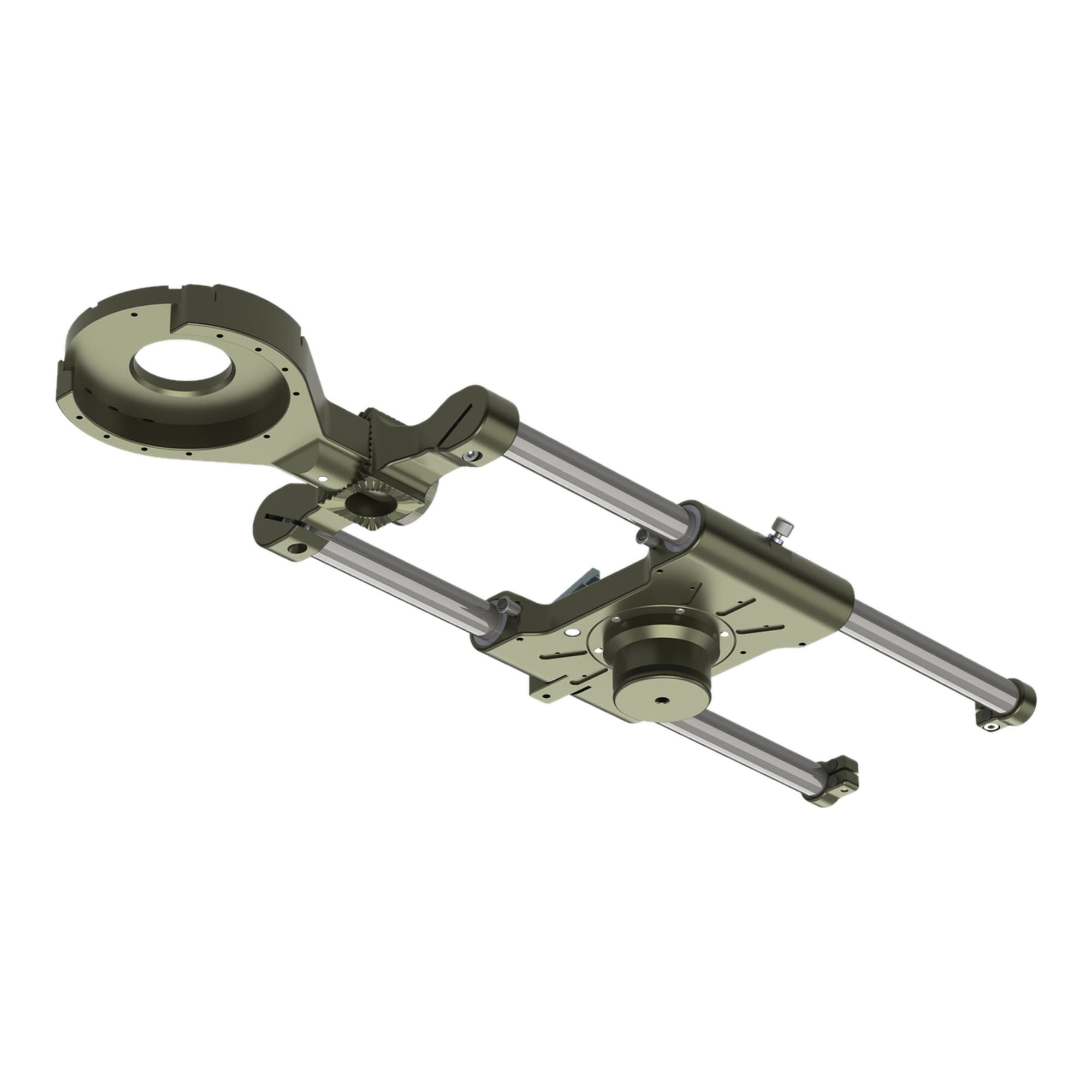
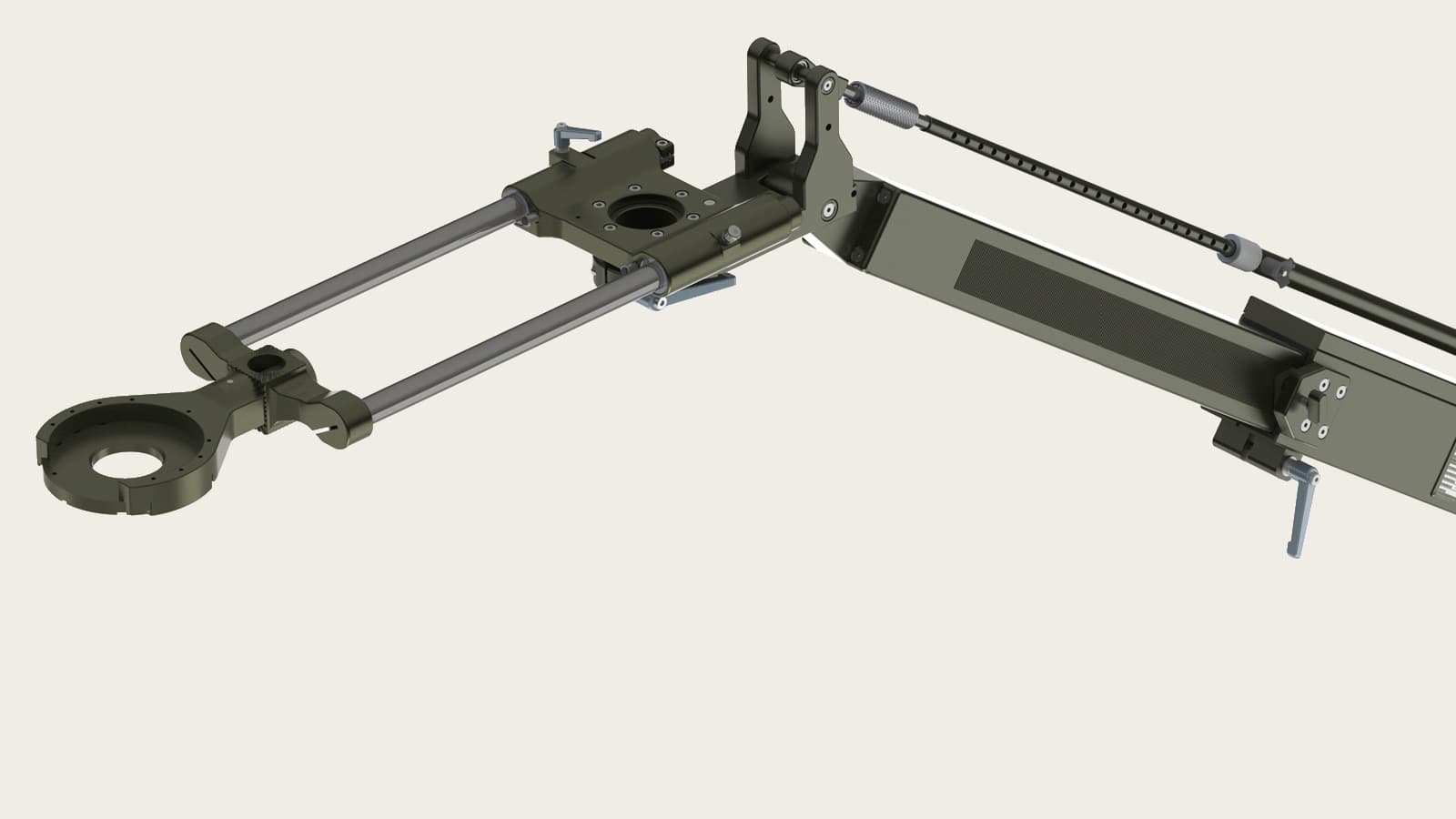
The GF-Jib Slider adds a third move to a jib arm. On top of the boom and the swing, the camera travels along the arm itself: the centre plate clamps to the jib and stays there, and the two 30 mm rails carry the camera through it. Brake, friction and a spirit level sit on the plate.
68 cm end to end, 25.5 cm across the rails, 12 kg with a base mount and a nose mount fitted. Both ends are chosen separately — Mitchell or Euro onto the arm, Mitchell or a 150 mm bowl under the camera — and the toothed coupling at the nose turns over for underslung work. Machined from high-grade aluminium and hard-anodized in Germany by Grip Factory Munich.
GF-Jib Slider · Datasheet
| Dimensions | ||
|---|---|---|
| Width across rails | 25.5 cm | 10" |
| Rail diameter | 30 mm | 1.2" |
| Centre plate | 18 cm | 7" |
| Fittings | |
|---|---|
| Jib connection | Mitchell, Euro clamp or Euro adapter |
| Centre plate | Brake, friction and spirit level |
The move the arm cannot make
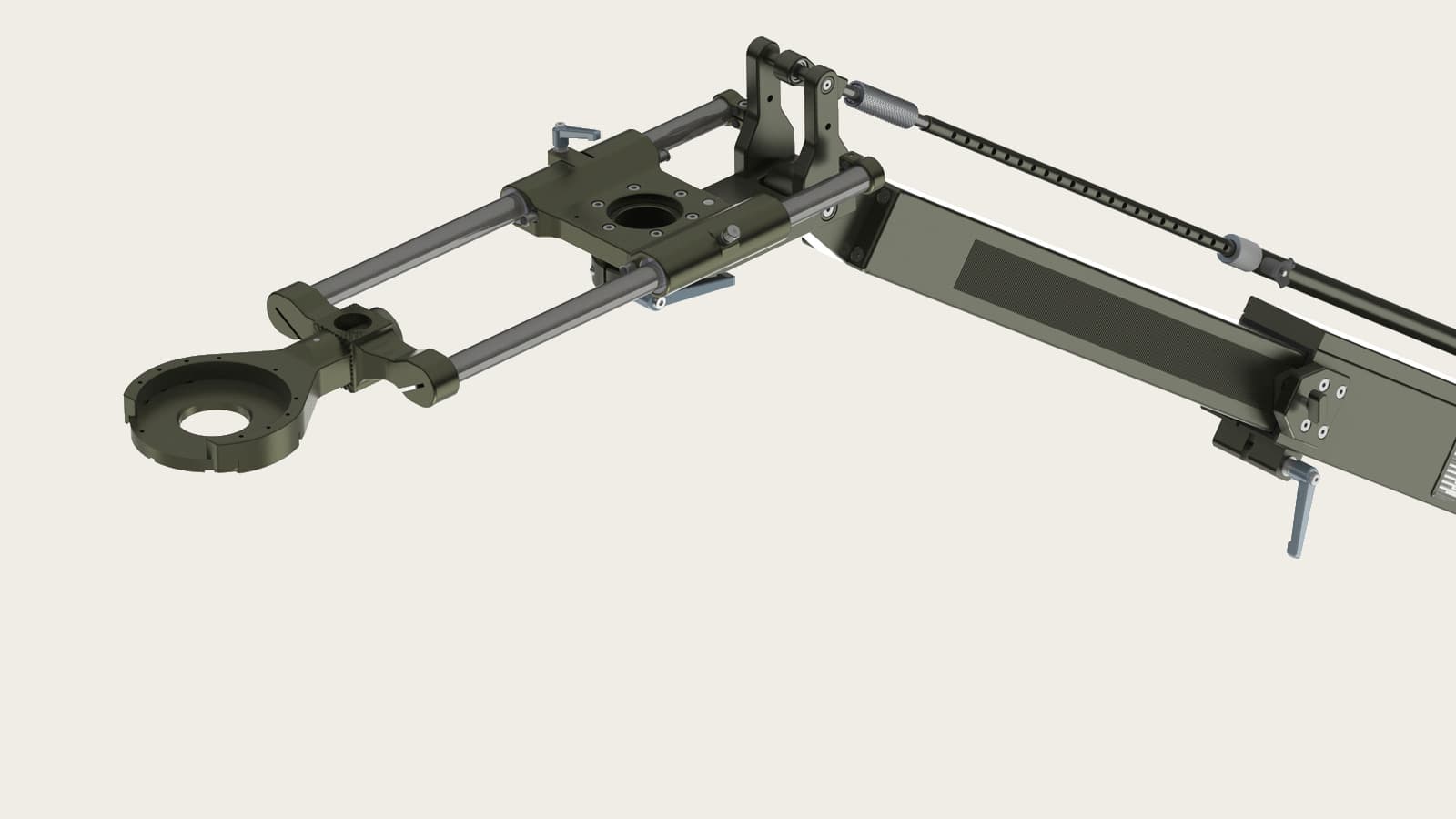
Boom and swing both pivot around the same point, so the camera always travels on an arc. The slider runs it in a straight line instead: the plate stays clamped where the GF-Jib ends, and the rails carry the camera past it. On a locked-off arm that is a slide; during a boom it is a second move laid over the first.
The GF-Jib →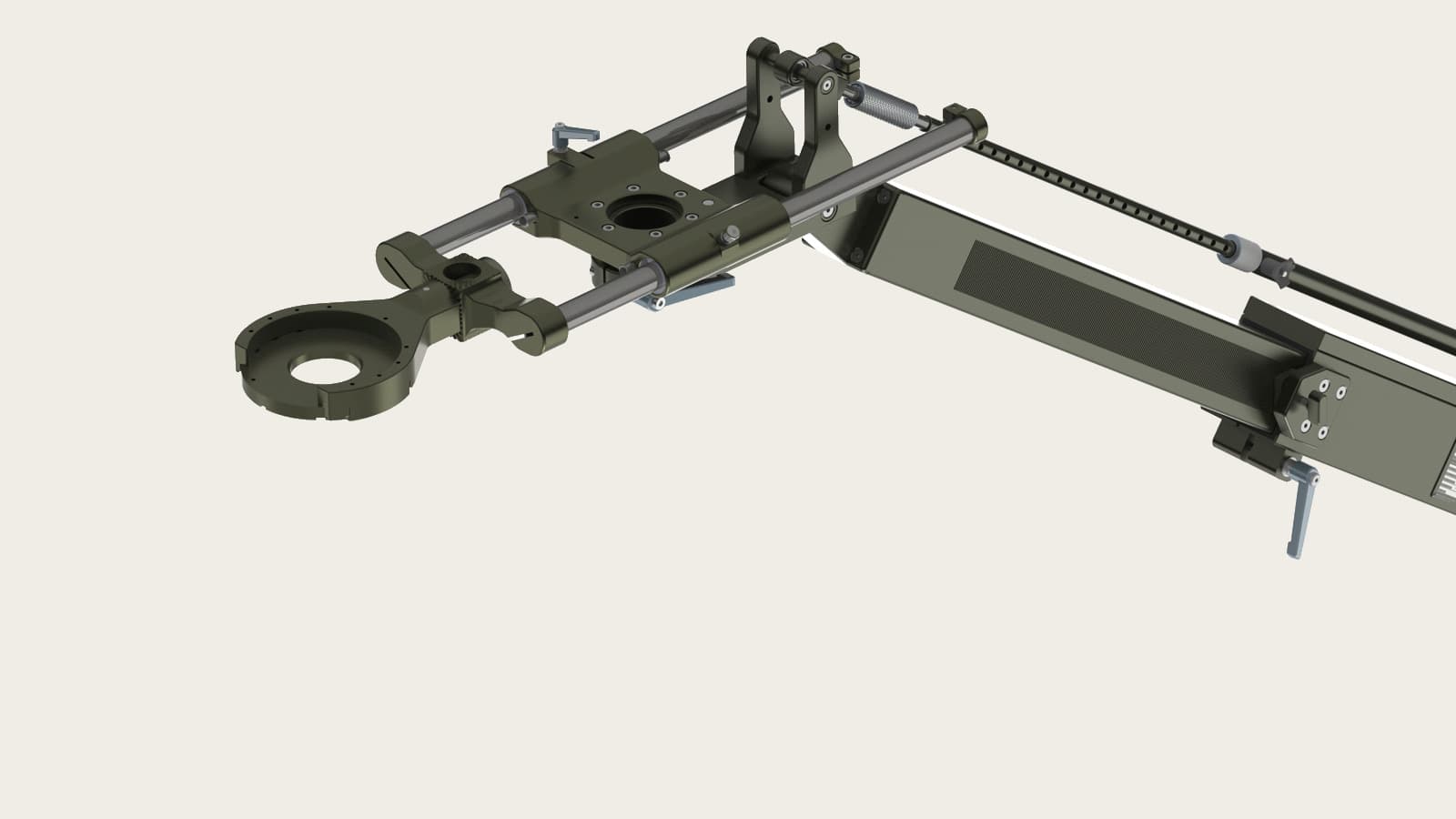
Onto the GF-Jib
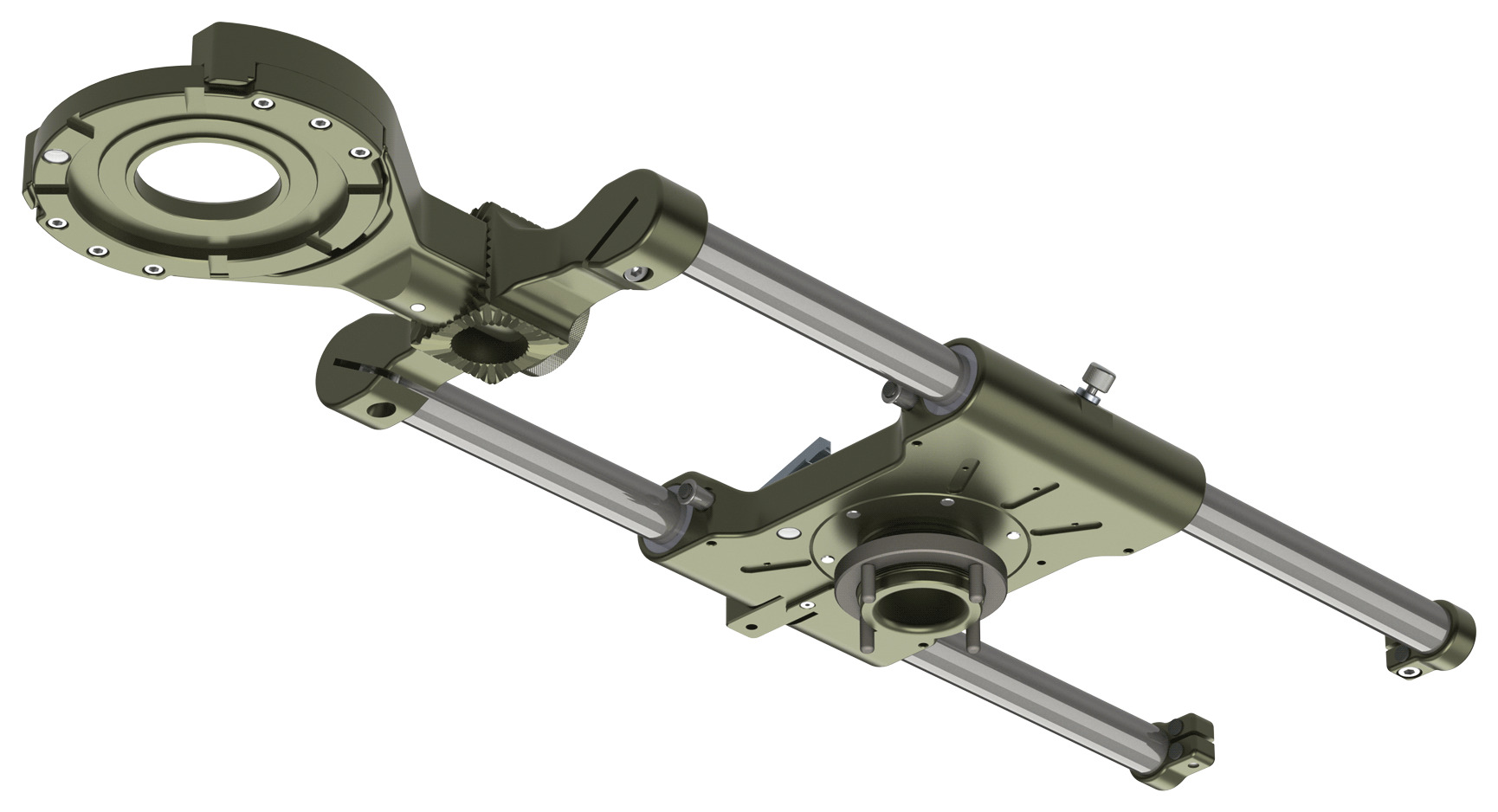
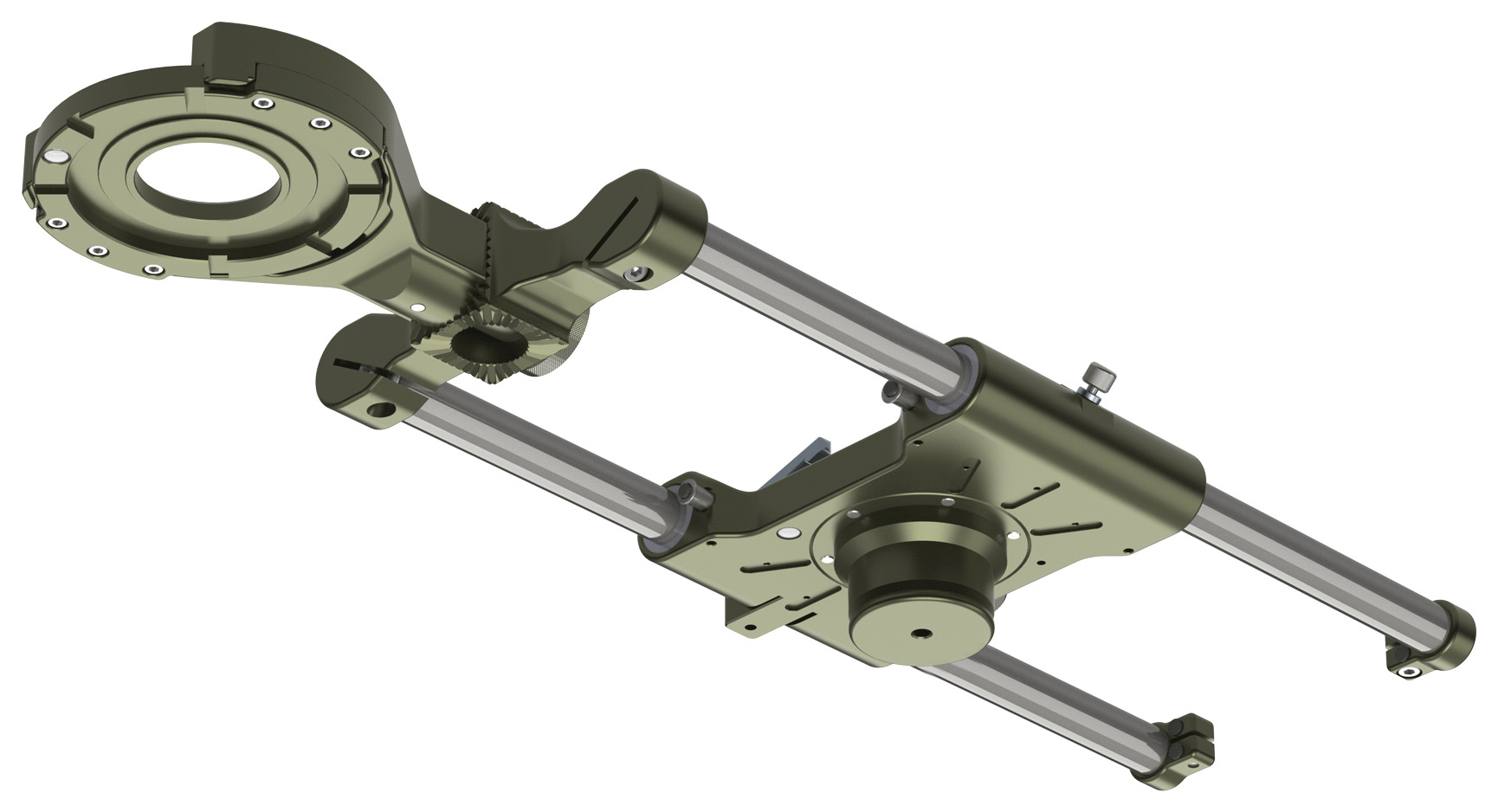
What sits under the centre plate is a separate part, so the same slider goes onto a Mitchell or onto a Euro fitting without a stack of adapters in between. Three are available, and which one you need depends on how your GF-Jib ends — not on anything the slider needs.
- Mitchell Base Mount — for an arm that ends in a Mitchell receiver
- Euro Clamp Base Mount — clamps onto a Euro adapter
- Euro Adapter Base Mount — the counterpart, for an arm that ends in a clamp
Brake, friction, level
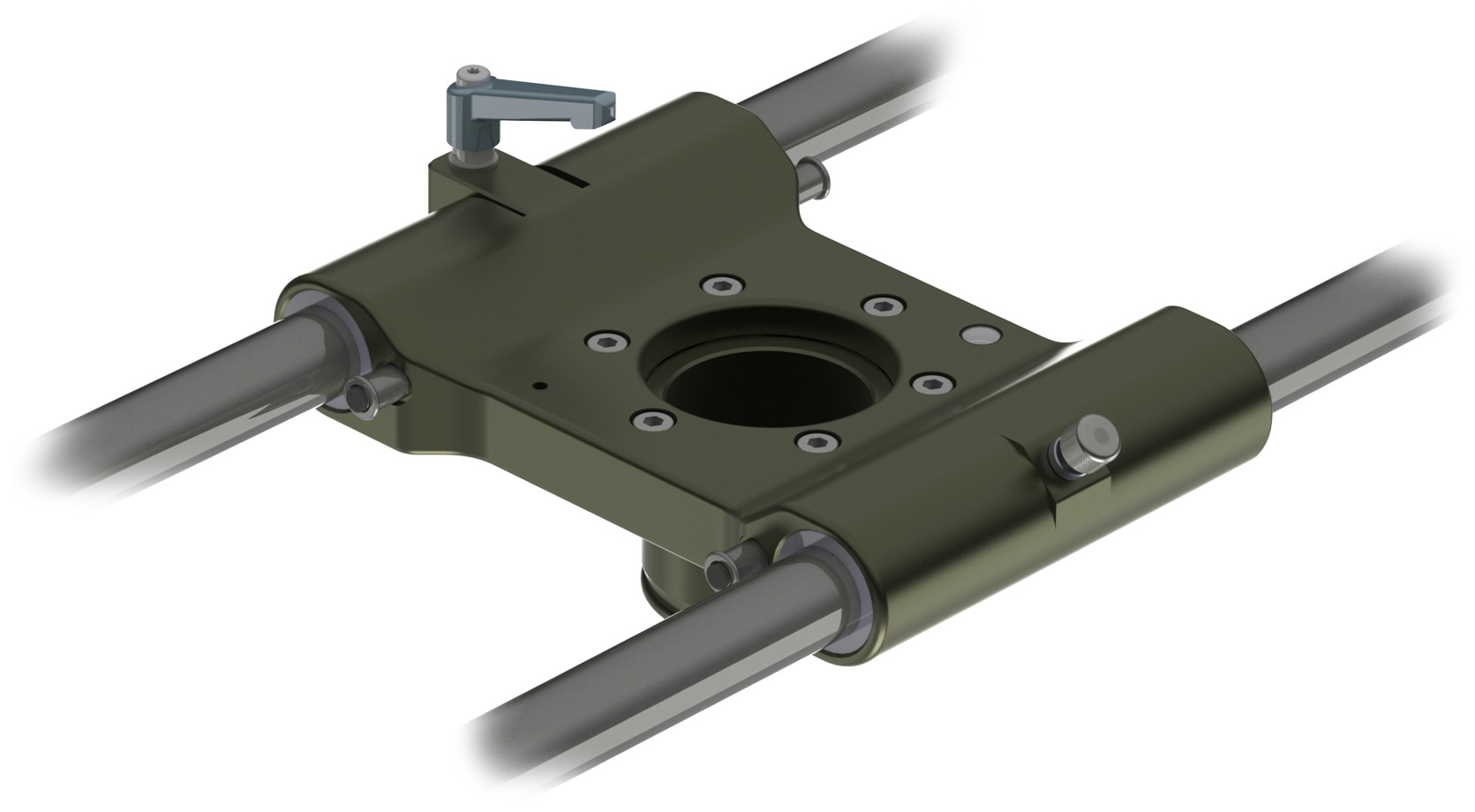
Three things sit on the centre plate. The brake parks the rails where they are. The friction sets how much force it takes to move them, which is what makes a slide look deliberate rather than pushed. And a spirit level says whether the plate is sitting straight before either of them matters.
Under the camera
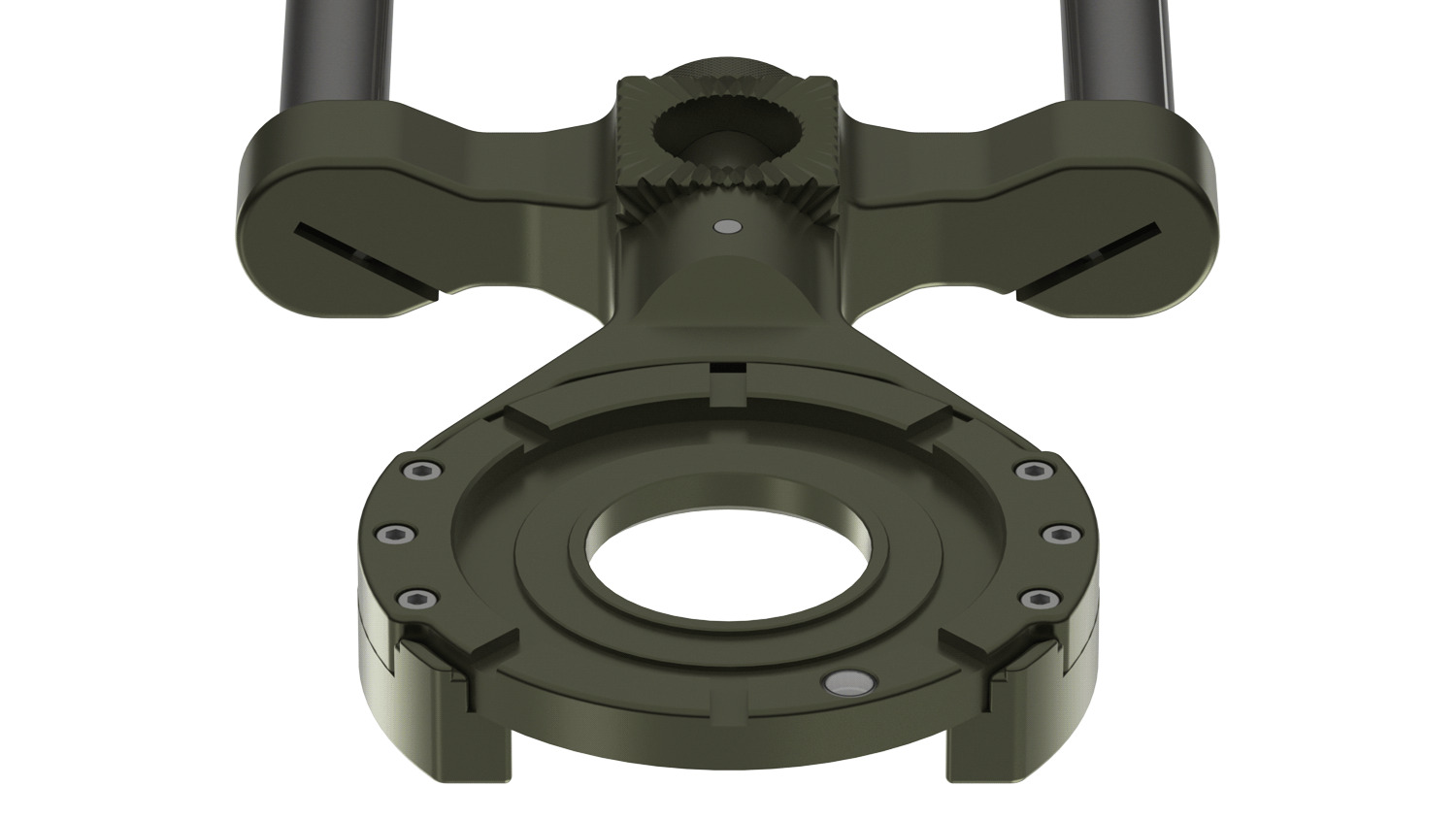
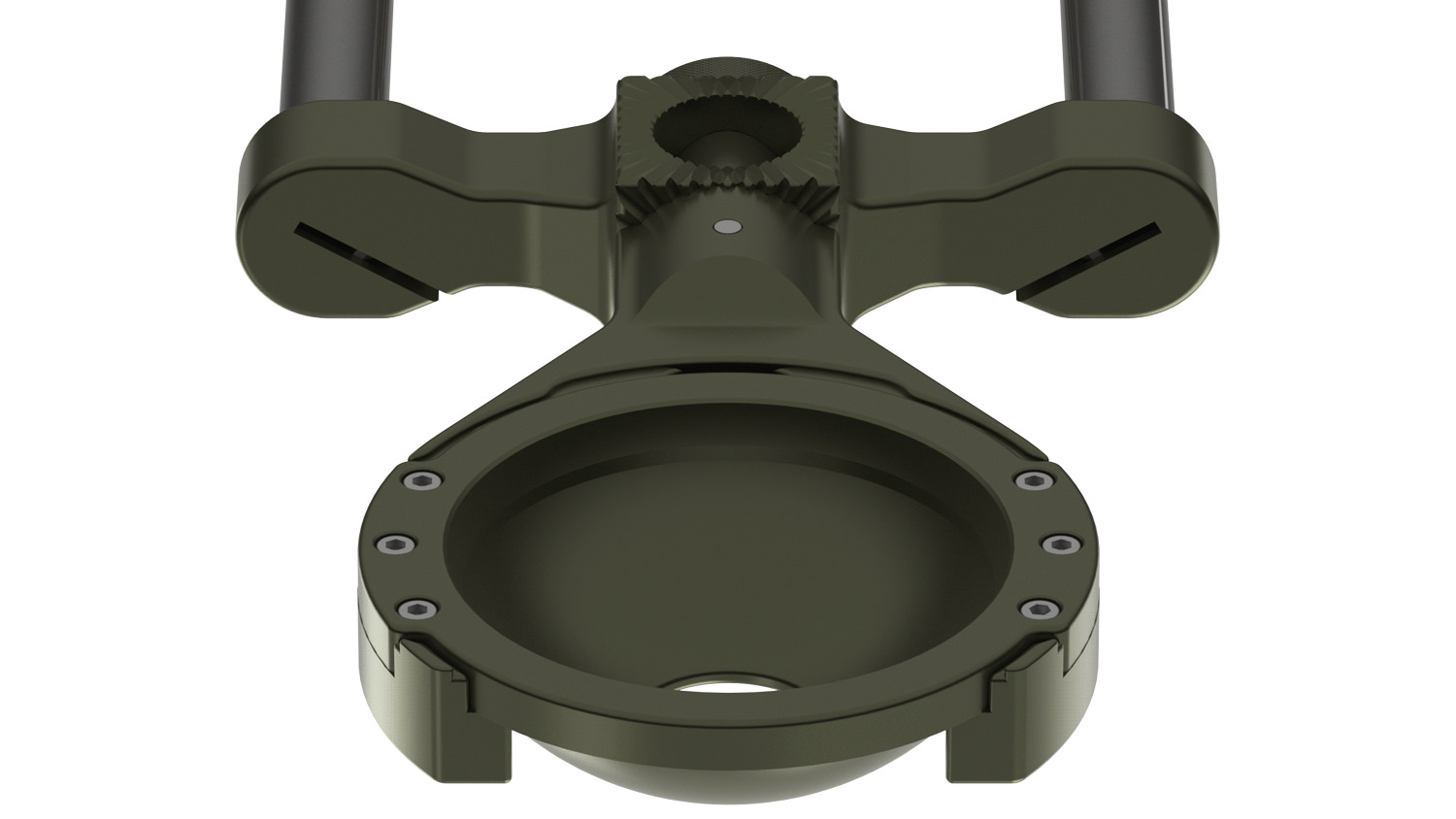
The nose end takes the two interfaces most heads on a truck expect: a Mitchell ring for remote and fluid heads that land on a Mitchell, or a 150 mm bowl machined into the mount for the larger fluid heads. Both bolt to the same face, so changing the interface is a spare part rather than a second slider.
Turned over on set
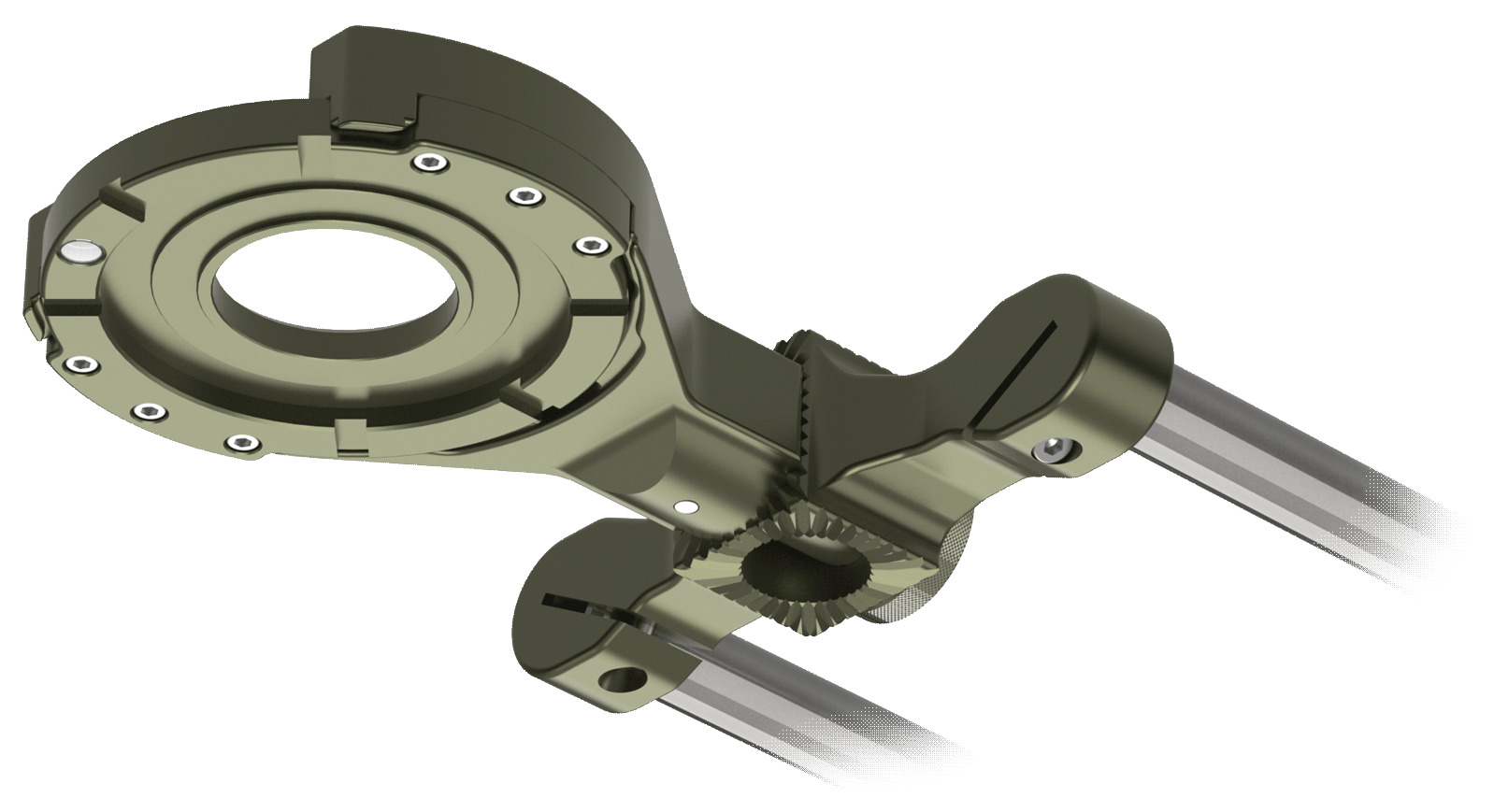
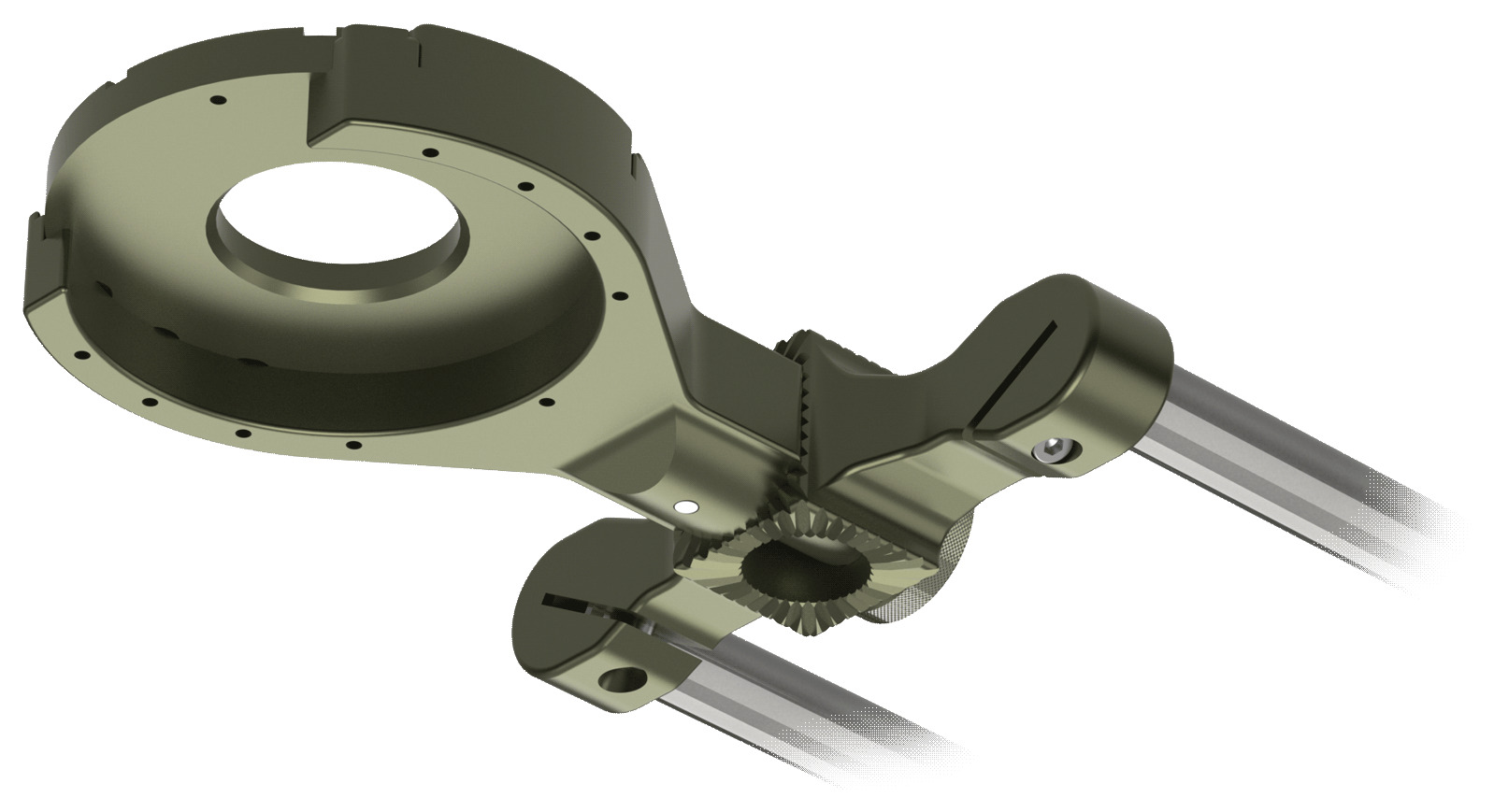
The nose mount sits on a toothed coupling rather than a plain clamp, so it goes back on in one defined position and not somewhere near it. Loosen it, turn the mount over, tighten it: the camera hangs under the rails instead of standing on them, and nothing else about the rig changes.
Dimensions
Two rails of 30 mm, 25.5 cm apart, 68 cm end to end, with an 18 cm plate running between them. Twelve kilos with a base mount and a nose mount fitted — that is the figure to hold against the payload of the GF-Jib it goes on.